Summer Is Coming — And So Are the Bills
Summer camps, sports clinics, swimming lessons, school trips. The warmer months bring a wave of enriching activities for children — and a wave of invoices, deposits, and registration fees for their parents. When you're co-parenting, these costs can become a flashpoint if there's no clear system in place.
It doesn't have to be that way. With a bit of structure, summer expenses can be handled without conflict — or at least without unnecessary confusion.
Why Summer Costs Are Especially Tricky
Regular monthly expenses — school lunches, health insurance, after-school care — follow a predictable rhythm. Summer camps don't. They're often:
- Paid upfront — one parent pays the full amount, then needs to be reimbursed
- Decided quickly — registration windows close fast, leaving little time for discussion
- Significant in amount — a week-long camp can easily cost hundreds of euros
- Not clearly defined in any agreement — many custody arrangements don't specify how to handle extracurricular activities
This combination — urgency, cost, and ambiguity — is exactly where misunderstandings happen.
Who Decides, Who Pays?
There's no universal answer, but there are two practical approaches most co-parents settle on:
1. Mutual agreement before booking
Before registering a child for any activity, both parents agree — on the activity itself, and on who covers what share. Nothing is booked until both are on board. This is slower, but avoids disputes later.
2. One parent decides, documents everything
Sometimes decisions need to happen fast. One parent goes ahead, pays, and immediately records the expense with a receipt. The other parent then reviews and approves (or raises a concern). The key is: the record exists from day one. No reconstructing costs from memory weeks later.
Whichever approach you use, what matters is that the expense is documented — with a receipt, a clear amount, and a date.
Keeping Records Without the Awkward Conversations
One of the hardest parts of co-parenting finances isn't the math — it's the communication. Asking for reimbursement can feel like a confrontation. Being asked can feel like an accusation.
Having a neutral, shared record changes that dynamic. When both parents can see the same expense history — what was paid, when, for what, and what the agreed split is — there's less room for „I never agreed to that" or „you never told me."
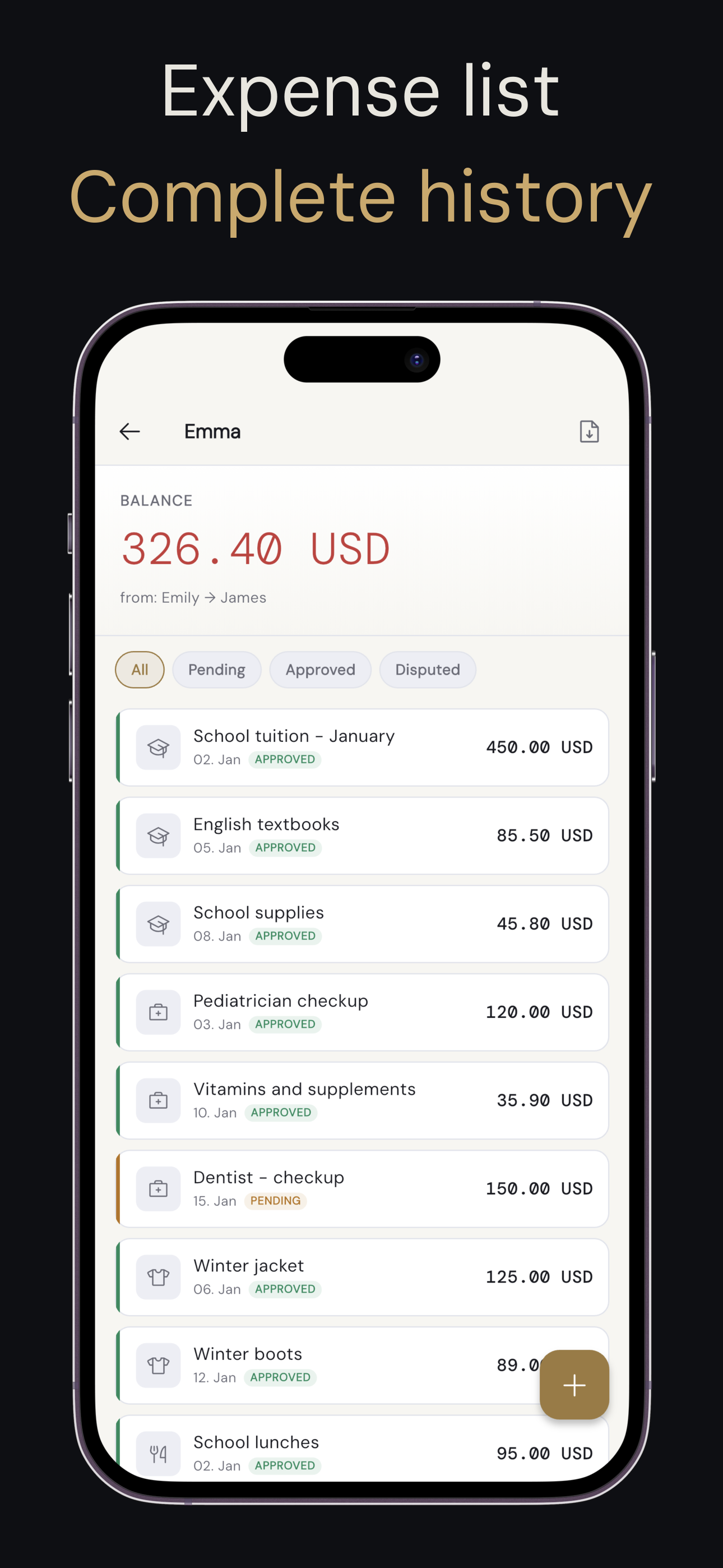
This is exactly what Duo is designed for. You log the expense, attach the receipt, and your co-parent gets notified. They can approve it or raise a concern with a written reason. The record stays intact either way. No deleted messages, no forgotten verbal agreements.
Practical Tips for Summer Expense Season
- Log expenses immediately — don't wait until the end of the month. The receipt is fresh, the context is clear.
- Attach the actual invoice or confirmation — a screenshot of the booking confirmation counts. It removes any doubt about what was paid.
- Agree on categories in advance — decide together whether summer camp counts as „education," „extracurricular," or something else. Consistency helps at settlement time.
- Don't assume — document — even if you've verbally agreed, log it. A written record protects both of you.
- Review the balance before summer ends — don't let expenses accumulate for months. A mid-summer check-in keeps things manageable.
A Summer That's Good for Your Child — and Manageable for You
Your child doesn't need to know about any of this. They just need to show up at camp with sunscreen and a good attitude. The financial side — who paid, who owes what — is your job to manage quietly and clearly.
With a shared record that both parents trust, summer can be what it's supposed to be: a break for the kids, and a little less stress for everyone.